Sweden
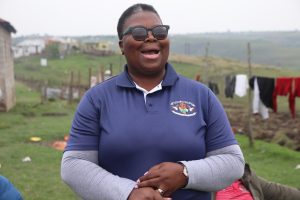
The Executive Mayor of the Joe Gqabi District Municipality, Councillor (Cllr) Nomvuyo Mposelwa, has advocated at the international level, for a transformed local government that will see more women and youth in leadership roles.
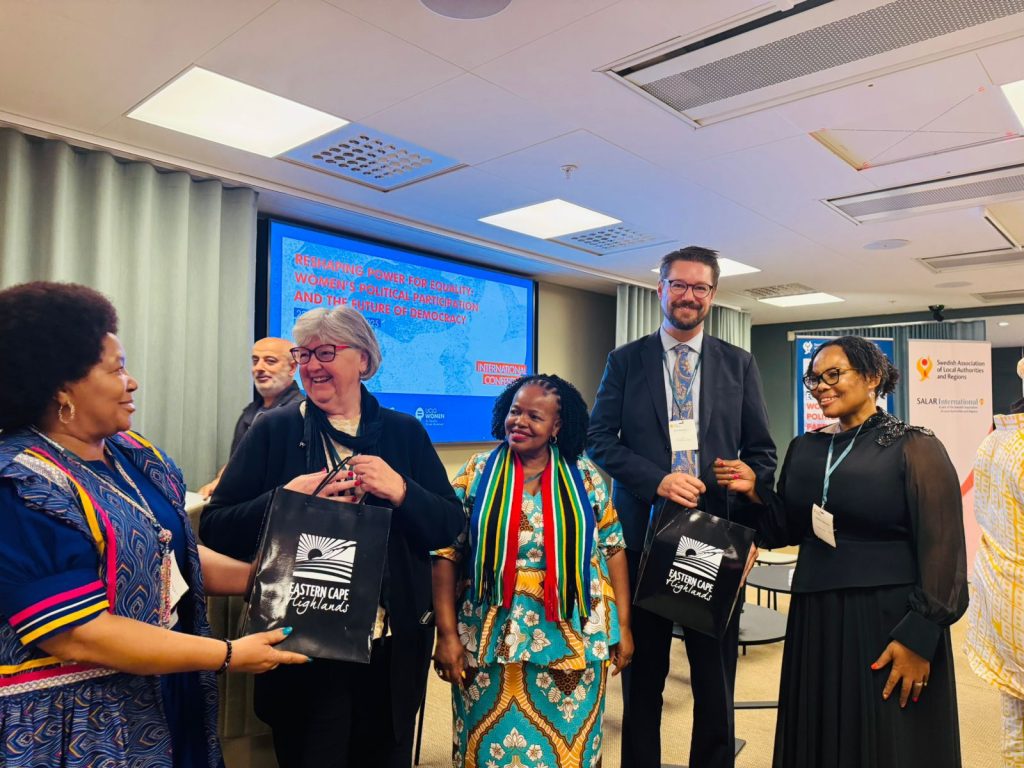
Mposelwa made the call during her participation in a two-day international conference co-hosted by the United Cities and Local Governments (UCLG), the Swedish Association of Local Authorities and Regions (SALAR), and the UCLG Women, held from 23-24 September 2025 in Stockholm, Sweden.
Themed “Reshaping Power for Equality: Women’s Political Participation and the Future of Democracy”, the conference convened local and regional government leaders, networks of elected women officials, and other key stakeholders from around the world to mark three decades since the Beijing Declaration – a resolution to promulgate a set of principles concerning the equality of men and women, adopted by the United Nations at the Fourth World Conference on Women in September 1995 – and to lay the groundwork for the next 30 years of feminist municipal leadership.
Mposelwa participated in her capacity as the National Commissioner of the South African Local Government Association (SALGA) Women’s Commission. She was a panellist for a discussion on “Young Feminist Leadership: Driving Local Democratic Transformation”, which focused on young feminist leadership and intergenerational democratic renewal.
The theme for Day 1 centred around Feminist Leadership and Democratic Renewal, making a clarion call for power alliances and collective action. Meanwhile the second day’s programme focused on feminist governance for a new democratic horizon. The conference featured strategic dialogues to empower women’s political participation and leadership, exchanges on critical issues such as gender-based violence, youth engagement, and transforming
social norms at the local level.
Making her remarks during the panel discussion, Mposelwa highlighted that “Democracy at local government level cannot thrive without mentorship and youth empowerment. Too often, young people, especially young women and LGBTIQ+ youth, are excluded or treated as token voices. Mentorship opens the doors, while empowerment ensures they lead with innovation and feminist values.”
“Intergenerational dialogue is key. It’s not just about passing the baton; it’s about shared spaces where experience meets fresh ideas. When generations work together, blind spots are challenged, solidarity grows, and leadership pipelines reflect the diversity of our communities,” she said.
Mposelwa explained that municipal youth forums matter because, if reimagined through a feminist lens,
they can become incubators of leadership, building confidence, skills, and real partnerships between young and seasoned leaders. “SALGA’s Youth Commission will strengthen this pipeline by linking local voices to national decision-making,” she added.
Mposelwa emphasised that young feminist leadership is already renewing democracy. She explained that, to sustain it, we must invest in mentorship, foster intergenerational partnerships, and support institutional vehicles that ensure youth voices are not just heard but acted upon.
Further discussion topics included Transforming Social Norms for Gender Equality; Reflecting on 30 Years Since the Beijing Declaration and the Role of Local Governments in Shaping the Next 30 Years; Women’s Political Participation; Institutional change, representation and intersectionality; Equality and Democratic Renewal; and The Role of Locally Elected Women’s Networks for Joint Strategising and Solidarity.