By Joseph Chirume
Motherwell
The Nelson Mandela Bay Municipality has stepped up its training of residents on how to turn waste into money, resulting in a healthy environment and to also create jobs for the unemployed.
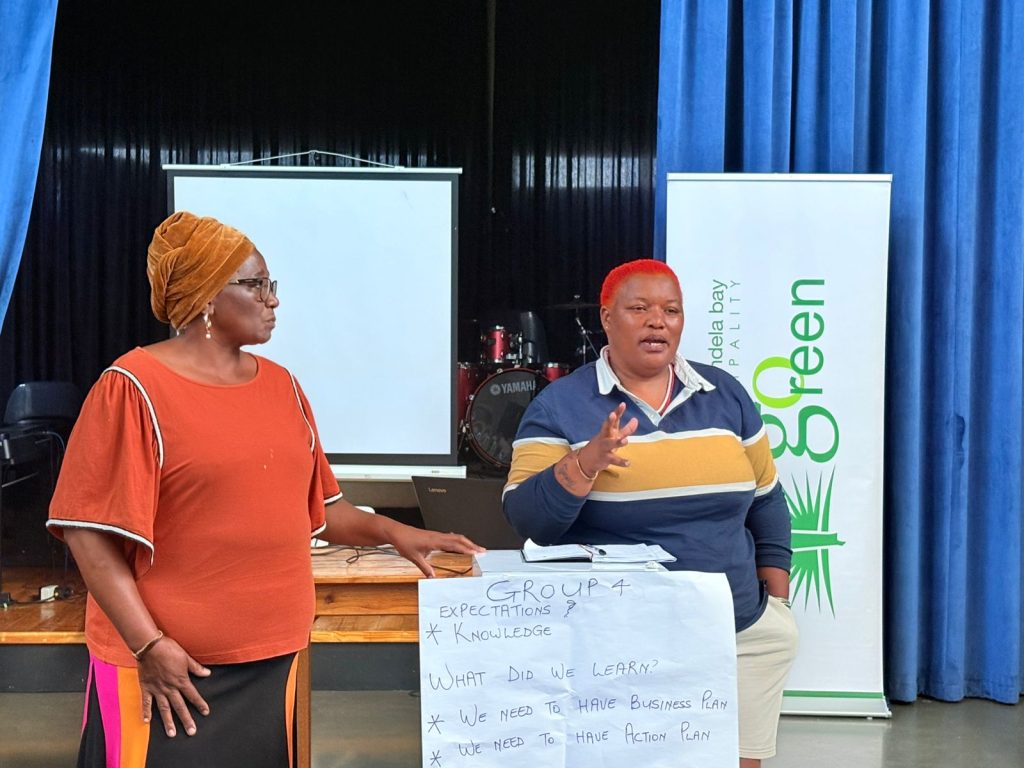
The Municipality conducted a three-day workshop that ended on 9 October 2025 at the Mend Arts Centre in New Brighton, Gqeberha. The training was under the theme ‘Manage Business Operations Training’.
The training session was officially opened by the Municipality’s Public Health Directorate – Waste Management Sub-Directorate Development Officer, Esethu Ndzamela, who expressed encouragement that so many participants stayed engaged throughout the programme.
He said, “For us as the Municipality, the law is clear: it is our responsibility to ensure all waste and related activities are properly managed in the Metro. We can never shy away from you — the worst we could do is the bare minimum, but that’s not what we are here for. You are the ones who can take this education back to the broader communities across the Metro.” Ndzamela also stressed the importance of representation across all six regions of Nelson Mandela Bay, noting that even outlying areas such as Greenbushes face unique challenges that require attention.
The training was designed not just as a learning opportunity, but also as a networking platform. Participants were encouraged to share successes, challenges, and lessons learned so that fellow reclaimers can take practical insights back to their communities.
“When one of you shares what’s working, the next reclaimer can take that lesson forward. This is not just training — it’s a chance to build a network of 27 other reclaimers who share the same journey,” Ndzamela explained.
Ndzamela revealed that one of the Municipality’s ongoing initiatives was to strengthen waste management compliance through joint operations with spaza shop owners adding that these operations emphasise partnership over enforcement.
He stated that shop owners who comply with waste regulations are issued with a certificate of acknowledgement, confirming proper waste management practices and giving them recognition and credibility within the community emphasising that the approach builds accountability while also empowering small business owners to take pride in maintaining a clean and healthy environment.
During the engagement, stakeholders shared their concerns and needs regarding resources. Several key points emerged:
- Conditions from PROs (Producer Responsibility Organisations):
- When requesting resources such as trolleys or baling machines, PROs require evidence of outputs.
- They often ask:
- “How much material have you recycled so far?”
- “Does your current output justify the resource?”
- “If we provide this resource, how will you increase your volumes?”
- “How many jobs will this resource create?”
- Resources are therefore not provided freely; they come with expectations of measurable growth and sustainability.
- Need for Documentation & Record Keeping:
- Stakeholders must provide written plans and records of recycling activities.
- Documentation strengthens requests for support and funding.
- The Municipality emphasised the importance of reclaimers regularly recording outputs and challenges.
- Specific Resource Requests Discussed:
- Trolleys:
- Easier to obtain due to an existing MOU with a PRO.
- Municipality committed to requesting additional trolleys for wider distribution.
- Baling Machines:
- Costly (±R400,000) and require ongoing maintenance and servicing.
- Not feasible without consistently high production volumes (±60 tonnes per month).
- Interim recommendation: use bulk bags and ball pits to package and sell recyclables safely.
- Bulk Bags:
- Identified as an immediate need to support packaging and sales.
- Phased Support Approach:
- Resources must be aligned with current production levels.
- Support will be provided in phases: reclaimers receive what is needed for their current capacity, with scope to expand as production increases.
- The ultimate goal is for reclaimers to become self-sufficient, not entirely dependent on ongoing external aid.
- Next Steps:
- Reclaimers were encouraged to draft a resource plan outlining:
- Current output levels
- Projected growth with requested resources
- Job creation opportunities
- The Municipality will use these plans to advocate with PROs and secure the necessary resources.
It was highlighted that this structured approach ensures that support is sustainable, measurable, and tailored to the real needs of the Metro’s recycling community.